A Small Intervention That Worked – And what worked for me might work for others too. Hence sharing with you a moment of connection and breakthrough…
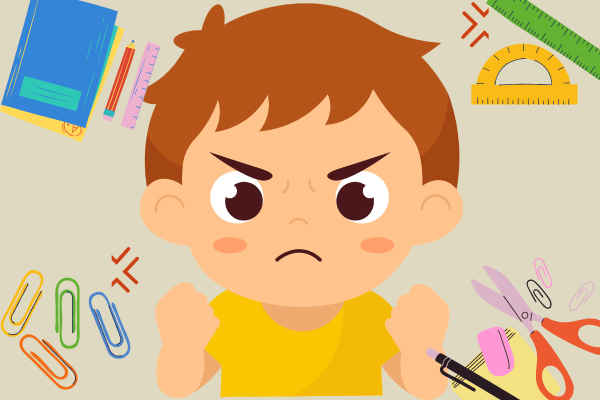
“He behaves very badly. If he doesn’t understand anything or doesn’t know the answer, he completely loses control… yes, at home and in school… You know what he did once? During an online class at home, when the teacher asked him a question, he threw his book at the the computer screen… he tears his books and notebooks, or makes ugly scribbles on them. He simply cannot control it.”

This was a mother describing her 8-year-old son to me, while the boy sat beside her, visibly uncomfortable and irritated at being the topic of discussion.
I turned to him and smiled. He tried to return it, but couldn’t quite manage. I didn’t rush into questions about the problem. Instead, I began by engaging him gently—asking about his class, his favourite sport, his favourite subject. As he gradually settled and began to feel a little safer, I shifted the conversation.

Looking at him calmly, I asked, “Do you get very angry when you don’t know something?” … the boy simply nodded.. I continued “So angry that you feel like tearing your book or scratching it hard with your pencil?”
“Yes,” he replied in a voice barely audible as if waiting to get an earful from me next moment.
“Okay… And you know what? You can do that.’ I added looking straight at him.
He looked up, startled. That was not the response he was expecting. He glanced at his mother, then back at me, as if trying to make sense of what he had just heard.
I continued slowly, “It’s okay to feel upset and angry. But next time When you feel that way, instead of scratching your school book or notebook, you use a rough notebook—an old one you don’t need anymore. You can tear it, scribble on it, even crumple it into a ball and throw it away. That way, the anger comes out, but nothing important gets damaged. Does it make sense to you? Do you think you could try that?”
He paused for a moment, then nodded thoughtfully.
Throughout this exchange, his mother listened quietly.
I then spoke with her about the importance of helping children find safe and acceptable ways to express overwhelming emotions, rather than trying to suppress or punish the expression itself. Children often need permission and guidance to channel anger in ways that do not harm themselves, others, or relationships.
It has now been around six months since that session. In all this time, all I have heard from the mother, is “Thank you.”
Sometimes, what looks like a complicated behavioural problem is really a child struggling without tools. And sometimes, a small shift in how we respond becomes the first tool they truly learn to use.
Your thoughts? Drop ’em in comments 👇


Leave a Reply