The Teacher Didn’t Teach the Meanings. He Taught Something Far More Valuable.
While channel surfing recently, I stumbled across a simple YouTube video that stayed on my mind long after.
A teacher was interacting with a small group of children. He asked each child two simple questions:
❝What is your name?❞ ❝Do you know what your name means?❞
One by one, the children answered. Everyone knew their names, of course, but very few knew what those names actually meant.
What impressed me was the teacher’s response. No comments, no judgements, just a smile and he moved on to the next child. When everyone had answered, it turned out that only two students out of fifteen knew the meanings of their names.
He told the children to find out the meaning of their names. Not immediately. Not as homework due the next day. “Take two days, four days, even a week, if you have to”.
Then the teacher said something beautiful.
Then he explained why he had asked the question in the first place.
❝It is not the meaning that is important. What matters is your curiosity. I want you to be curious to know—to ask questions, to understand the meanings behind things, and to want to know about the world around you.❞
That was the real lesson. In just a few minutes, he shifted the focus from knowing the right answer to developing the desire to seek answers.
And that, to me, is what distinguishes a great teacher from an ordinary one. An ordinary teacher may focus on delivering information. A great teacher awakens curiosity.
Curious children don’t stop learning when the lesson ends. They ask “why,” “how,” and “what if.” They observe, explore, question, and discover. They become lifelong learners because they have developed the habit of seeking understanding rather than simply collecting information. That lesson extends far beyond the classroom.
Whether it’s the story behind their own name, the reason the sky changes color at sunset, why leaves fall in autumn, or how kindness changes relationships—every question is an opportunity to nurture curiosity.
Over to you🎤. Drop your thoughts in the comments. ⋆✴︎˚。⋆
A Small Intervention That Worked – And what worked for me might work for others too. Hence sharing with you a moment of connection and breakthrough…
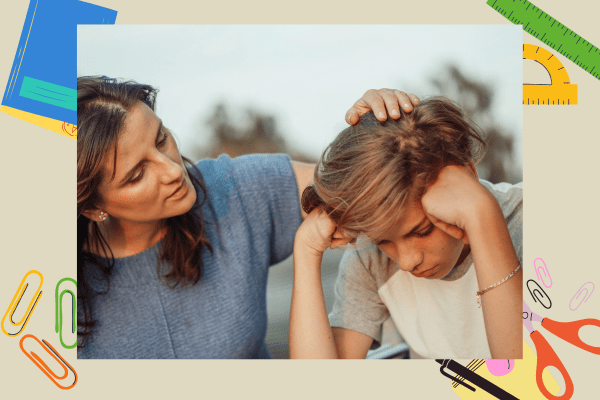
“He behaves very badly. If he doesn’t understand anything or doesn’t know the answer, he completely loses control… yes, at home and in school… You know what he did once? During an online class at home, when the teacher asked him a question, he threw his book at the the computer screen… he tears his books and notebooks, or makes ugly scribbles on them. He simply cannot control it.”
This was a mother describing her 8-year-old son to me, while the boy sat beside her, visibly uncomfortable and irritated at being the topic of discussion.
I turned to him and smiled. He tried to return it, but couldn’t quite manage. I didn’t rush into questions about the problem. Instead, I began by engaging him gently—asking about his class, his favourite sport, his favourite subject. As he gradually settled and began to feel a little safer, I shifted the conversation.
Looking at him calmly, I asked, “Do you get very angry when you don’t know something?” … the boy simply nodded.. I continued “So angry that you feel like tearing your book or scratching it hard with your pencil?”
“Yes,” he replied in a voice barely audible as if waiting to get an earful from me next moment.
“Okay… And you know what? You can do that.’ I added looking straight at him.
He looked up, startled. That was not the response he was expecting. He glanced at his mother, then back at me, as if trying to make sense of what he had just heard.
I continued slowly, “It’s okay to feel upset and angry. But next time When you feel that way, instead of scratching your school book or notebook, you use a rough notebook—an old one you don’t need anymore. You can tear it, scribble on it, even crumple it into a ball and throw it away. That way, the anger comes out, but nothing important gets damaged. Does it make sense to you? Do you think you could try that?”
He paused for a moment, then nodded thoughtfully.
Throughout this exchange, his mother listened quietly.
I then spoke with her about the importance of helping children find safe and acceptable ways to express overwhelming emotions, rather than trying to suppress or punish the expression itself. Children often need permission and guidance to channel anger in ways that do not harm themselves, others, or relationships.
It has now been around six months since that session. In all this time, all I have heard from the mother, is “Thank you.”
Sometimes, what looks like a complicated behavioural problem is really a child struggling without tools. And sometimes, a small shift in how we respond becomes the first tool they truly learn to use.
India has a rich tradition of multilingualism. Most of us grow up speaking two or three languages, thanks to the country’s incredible cultural and linguistic diversity.
I was reminded of this during an interaction at the University of Rhode Island. A young student asked me,
❝Renu, how many languages do you know?❞
I began modestly: ❝Hindi, English…❞ But perhaps I was in a slightly indulgent mood that day, so I continued, ❝…some Gujarati, I have studied Sanskrit, and I can understand and appreciate Urdu as well.❞
He looked visibly astonished—eyes widened, mouth slightly open. ❝ That’s quite a lot!❞ he said.
To keep the conversation going, I asked him the same question. He looked down, raised one finger, and replied somewhat sheepishly, ❝Only one.❞ I instantly regretted putting him in that spot.
(⸝⸝ᵕᴗᵕ⸝⸝) During the same informal interaction, someone shared a lighthearted joke:
❝ What do we call someone who speaks many languages?❞ ❝Multilingual.❞
❝Two languages? ❞ ❝Bilingual.❞
❝ And one language? ❞ ❝ …American.❞
Clearly meant in jest. But the stereotype made us reflect. It also set the stage for a deeper discussion on MULTILINGUALISM.
Soon, the conversation shifted to research in psychology and neuroscience, which shows that multilingualism is far more than just a communication skill—it is a cognitive advantage. From enhancing memory and problem-solving abilities to improving focus, fostering empathy, and even delaying cognitive decline, the benefits are both wide-ranging and well documented.
Multilingualism—the ability to use two or more languages—has profound effects on the brain’s structure and function. These advantages stem from the continuous mental exercise involved in managing multiple languages , strengthening executive functioning and mental flexibility.
India’s own intellectual and political leaders strongly advocated multilingualism. Figures like Mahatma Gandhi, Jawaharlal Nehru, Rabindranath Tagore, and B. R. Ambedkar believed that learning multiple languages expands the mind, builds cultural bridges, and serves as a powerful tool for social mobility and empowerment.
Reflecting this vision, educational policies in India have long supported the three-language formula. Recently, CBSE curriculum for 2026–27 has made a third language mandatory from Class 6. The National Education Policy’s emphasis on Indian languages. While some argue that this may limit the choice of foreign languages for students, many institutions are creatively addressing this by introducing language clubs and extracurricular opportunities.
I often hear parents express concern about the increasing academic load due to the additional language requirement. However, what is often overlooked are the significant cognitive benefits of language learning. It contributes to brain development, enhances executive functioning, improves focus, and nurtures creativity—while also strengthening communication and social skills.
At a time when global research strongly supports the advantages of multilingualism, it may be worth rethinking these concerns. Instead of viewing it as a burden, we could see it as an investment in a child’s intellectual and personal growth.
As the contemporary linguist G. N. Devy, who has documented hundreds of Indian languages through the People’s Linguistic Survey of India, aptly reminds us:
Losing languages means losing ways of understanding life.
Loose and free! Are they? Or are these words linked?
Why do these words keep whiring in my mind? Perhaps they are more deeply connected than they appear.
Recently, I came across a statement by Professor Shireesh Kedare, Director of IIT Bombay, in The Indian Express (March 6, 2026): “Coaching culture trains students to game the exam rather than build conceptual understanding. This approach doesn’t work in the IIT system.”
This stayed with me.
My thoughts wandered to the many reports of students resorting to self-harm in prestigious institutions, and to similar incidents in cities where coaching centres thrive but young minds quietly struggle. I even recalled a panel discussion I watched years ago, where heads of IITs spoke about the rising number of student suicides on their campuses.
One remark stuck: many students entering these institutions are those have not read any story books, watched meaningful films, pursued hobbies, or experienced unstructured play. From as early as Grades 6 or 7, they are absorbed into coaching systems. By the time they get here, they are often mentally exhausted, emotionally depleted, and physically inactive.
They are unprepared—not intellectually, but psychologically—for the journey ahead. For years, their singular goal has been to “get in.” Schools, parents, and coaching systems reinforce this idea.
I recall a school leader telling Grade 12 students: “Focus on getting into IIT. Once you’re there, life is set.” The implication was clear—work relentlessly now, and later you just chill and enjoy life. But reality is very different. And reality hits them hard as nothing, no one prepared them for that.
Many students discover that the pressure does not ease; it intensifies. Without genuine interest in their field, without emotional resilience, and without a broader foundation of experiences, they struggle to cope.
As Professor Kedare also points out in the same idea exchange that some students arrive driven more by the brand value of institutions than by thrir passion for learning. When faced with academic and personal challenges, they falter. He adds that he has seen students spiral—one, for instance, turned to excessive gaming and failed most first-semester courses.
This forces us to question the cost are we chasing success.
It is natural for parents to want the best for their children. But should childhood be sacrificed at the altar of coaching classes? Too often, we hear heartbreaking accounts of children apologizing to their parents for “failing” them—just before taking irreversible step.
Parents may not fully grasp the immense pressure their children carry, or how fragile their mental health can become under it.
So what can be done?
First, we must stop placing the entire weight of expectations on young shoulders. Children need time— for studies, and for life.
Time to play. Time to explore hobbies. Time to simply be.
Free play is not a luxury; it is essential. It supports emotional regulation and contributes to mental strength. Physical activity is equally critical—it nurtures both body and mind.
I know of a parent who once said, “She can play after her Class 12 exams. There’s no point wasting time now.” But is play really a waste of time?
Is it not fundamental to healthy development? Can children truly excel academically if their physical and emotional needs are neglected? Childhood is a critical period of growth—what is missed then cannot be fully recreated later.
Watching reels or playing video games is not the same as running outdoors, playing a sport, or engaging with peers. Through sports and play, children learn to solve problems, follow rules, handle victory and defeat, negotiate, collaborate, and persist. They learn resilience, they thrive.
And yet, while we speak often about social-emotional learning, we rarely give children the space to experience it.
Many parents also dismiss stories, poetry, theatre, or the arts as distractions. “What’s the use?” they ask.
Oh, the use is profound!
Stories build imagination. Poetry deepens emotional awareness. The arts cultivate empathy, reflection, and self-expression.
These experiences shape individuals who are not only academically capable, but also socially aware, emotionally intelligent, and truly prepared for life.
If we want our children to flourish and not just succeed—we must rethink what we value.
Now let’s turn to the words we read in the beginning. Those are not separate after all.They are threads of the same fabric.
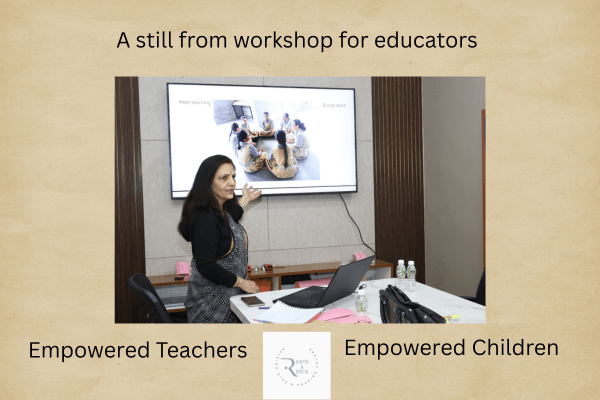
✦I hope to support the community at its most foundational level by empowering parents, teachers, and caregivers with practical ideas and meaningful strategies.
✦When the adults in a child’s world feel equipped and confident, children are more likely to flourish—reaching their full potential while growing into individuals who are socially and culturally competent, and physically, mentally, and academically strong. This vision is deeply personal to me, and it is what has led me here @ Roots n Wings.
Raising Kids & Shaping Future
⚡When I look around, I feel a growing urgency. We constantly read and hear about the challenges children face today—fragile mental health, low frustration tolerance, and an increasing need for instant gratification. Alongside this, digital addiction has emerged as a modern epidemic, often contributing to behavioral and emotional concerns.
⚡Adolescents, especially, are navigating a demanding world—balancing parental expectations, peer pressure, bullying, and their own inner questions about identity and belonging. At the same time, many parents and educational systems are still adapting to these rapidly changing needs. The increasing cases of self-harm among students remind us that we need to pause, reflect, and respond with greater sensitivity.
💫This is where I believe positive psychology can make a real difference.
It is not just about addressing problems after they arise, but about preventing them—building emotional strength, resilience, and awareness early on. It complements therapy by creating a strong foundation for well-being.
✦With my background in teaching, along with my training as a counselor and therapist, I feel prepared to contribute to this space. While I know my journey is still in its early stages, my intention is clear—to reach more people, to share what I’ve learned, and to make a meaningful difference.
✦And most importantly, I believe this with conviction—I am ready for this.
🔖Before you judge someone, walk a mile in their shoes. ๋࣭ ⭑ ๋࣭ ⭑
This old adage is all about empathy and I wish to expand it a bit. Before you heckle, harass, bully, insult, isolate or deride someone imagine yourself in their place. All the violence, conflict, poverty, corruption that we see around or read about stems from lack of empathy. Violence arises when we lose the ability to see others as individuals, when we fail to understand other people’s perspective and feel their pain.
✧˖ Therefore, to create harmonious and peaceful world society needs to be sensitized. We need to foster empathy, the ability to be aware of the feelings of others and imagine what it would be like to be in their position. Empathy lays the groundwork for positive relationships, and self awareness and social awareness are the primary requirements for kindling empathy.
✧˖ Fostering empathy is the ultimate antidote to violence. But who will do this? On whom lies the great onus? Like everything else this should also begin from home. Herein comes the role of us adults, greater responsibility is on teachers and guardians.
✧˖ Let’s see, ‘Can empathy be taught like a branch of knowledge? Can empathy be learnt like a skill? Or can empathy be passed as a piece of information?’ ‘No’. Empathy is neither knowledge, nor skill nor information. It is the matter of heart, feelings, sensibilities. Empathy can be stirred, fostered, nurtured in children.
➤ Given below are some of strategies that can be used effectively at home and schools for modelling and developing empathy over time. These strategies are more effective if fine-tuned according to the child’s age:
»The thumb rule is we should model whatever qualities we want to inculcate in children. So first step is to show empathy to children and how do we show it? By listening to them, by trying to see their points of views and by not dismissing their emotions.
»Discuss emotions with them. Ask how they are feeling, what bodily sensations they when they have big emotions. You may share your own emotions using I statements.
»📚Stories and pictures offer great opportunities to discuss emotions. There are several stories that can stir empathy, can move one, for instance stories written by Hans Anderson, Munshi Premchand, Charles Dickens, O Henry, Leo Tolstoy to name a few. We can take age appropriate stories and discuss how those characters feel in certain circumstances. For younger kids pictures can be used for discussing emotions so they can relate emotions to facial expressions and posture. This helps them understand other people’s feelings and emotions better. 😊😔🥹
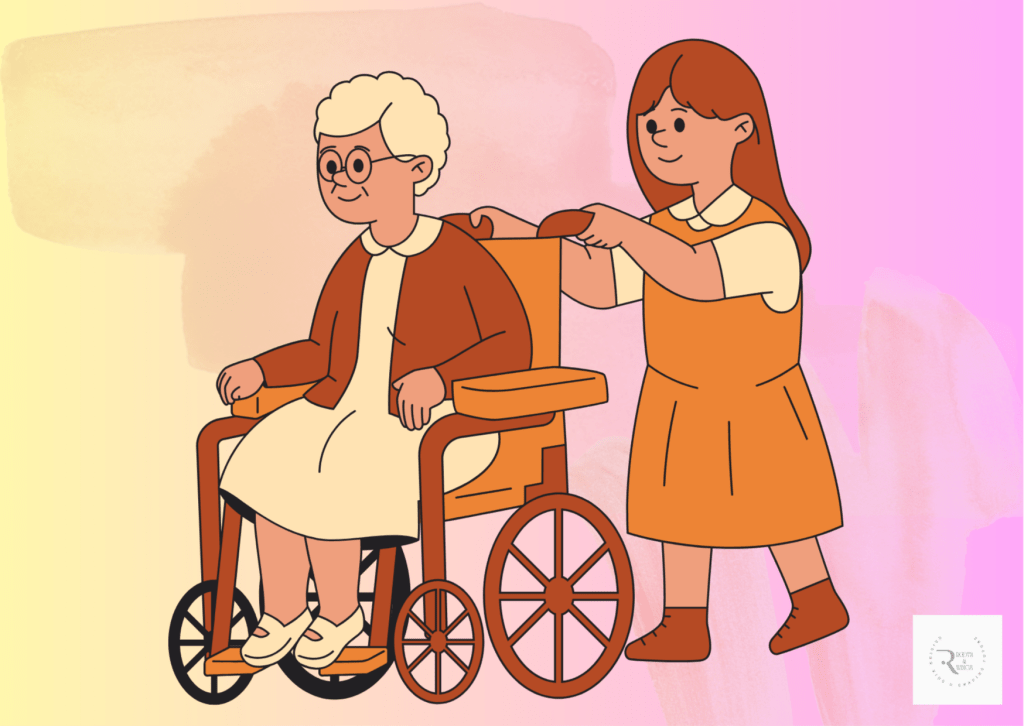
»Then, role play can be used in classrooms to activate empathy in children. Role play is actually, rather virtually putting one in someone else’s shoes. Role play can be used for embracing diversity, for understanding other people’s problems, behaviours, needs or viewpoints. Playing the role of someone differently abled or from different backgrounds or different age groups is a nice way to understand them. I’ll give two incidents that show how role play works up empathy. 🎭
On the Teacher’s Day, September 5th students run the school, they get into the roles of all the teaching and non-teaching staff and admin, as is the common practice in our country. One of my eighth graders, who was assigned the role of the peon for the day shared with the class later ‘This was the first time I realized how much work and responsibility the school peon carries every day. How hard his job is and how helpful he is for us.’ It was an important message. Apart from empathy, it also taught something about the dignity of labour.
In another example, my class of 10–11-year-olds was doing a lesson ‘A Different Kind of School’ which is about a school where Miss Beam, the principal had a unique method of teaching empathy. On certain days in the school some students were blindfolded or bandaged while other students had to help them. They did not have any disability but this was how they were to learn what it meant and how they could help others too. While doing this lesson I too suggested if we may also have similar activity and all the students welcomed the idea in one voice. And when one student did the role of a boy with an injured leg others were ready to offer help. And later students shared how they felt.
»Discussing news events, when children are old enough to discuss these, is another effective way of activating empathy. For example, the event I discussed in my previous post may make them more inclusive and more understanding. They may realize that people who are different from them too have their rights and they too have similar feelings and emotions and should be respected as such. The news gives enough opportunities to discuss issues like equality, justice, diversity, humanity etc.
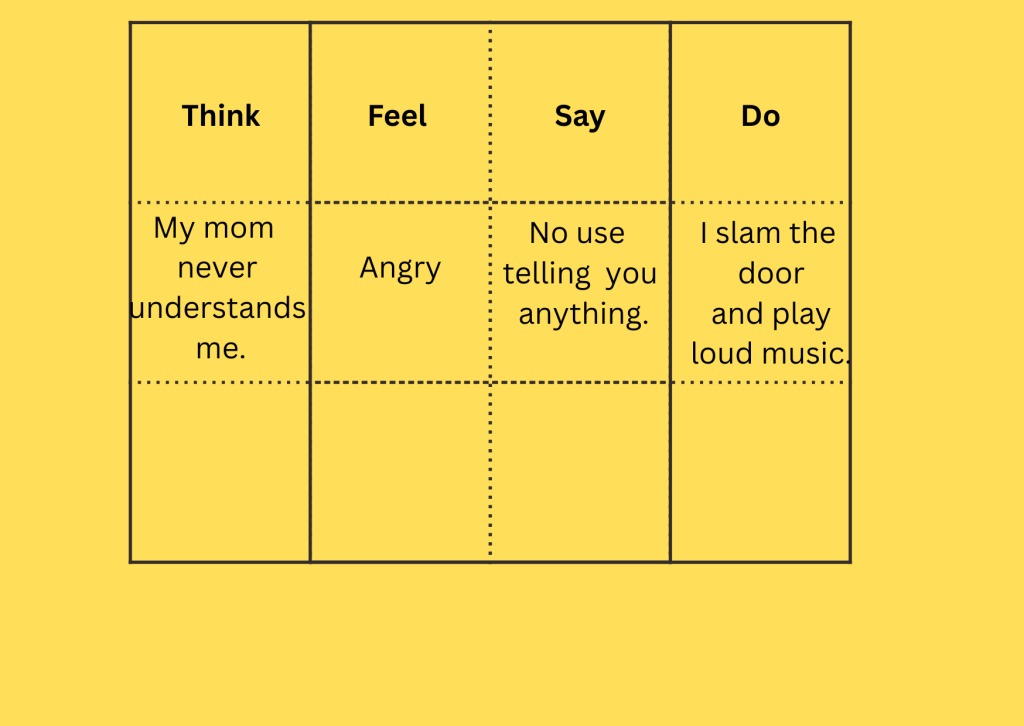
»In order to discuss emotions children may be shown the table to complete. Table with columns think, feel, say, do, as shown below. This can be adapted according to their ages. Younger ones can do with the help of emotion chart. older ones can do it through stories, pictures, characters, news. This makes them self aware and socially aware as well.
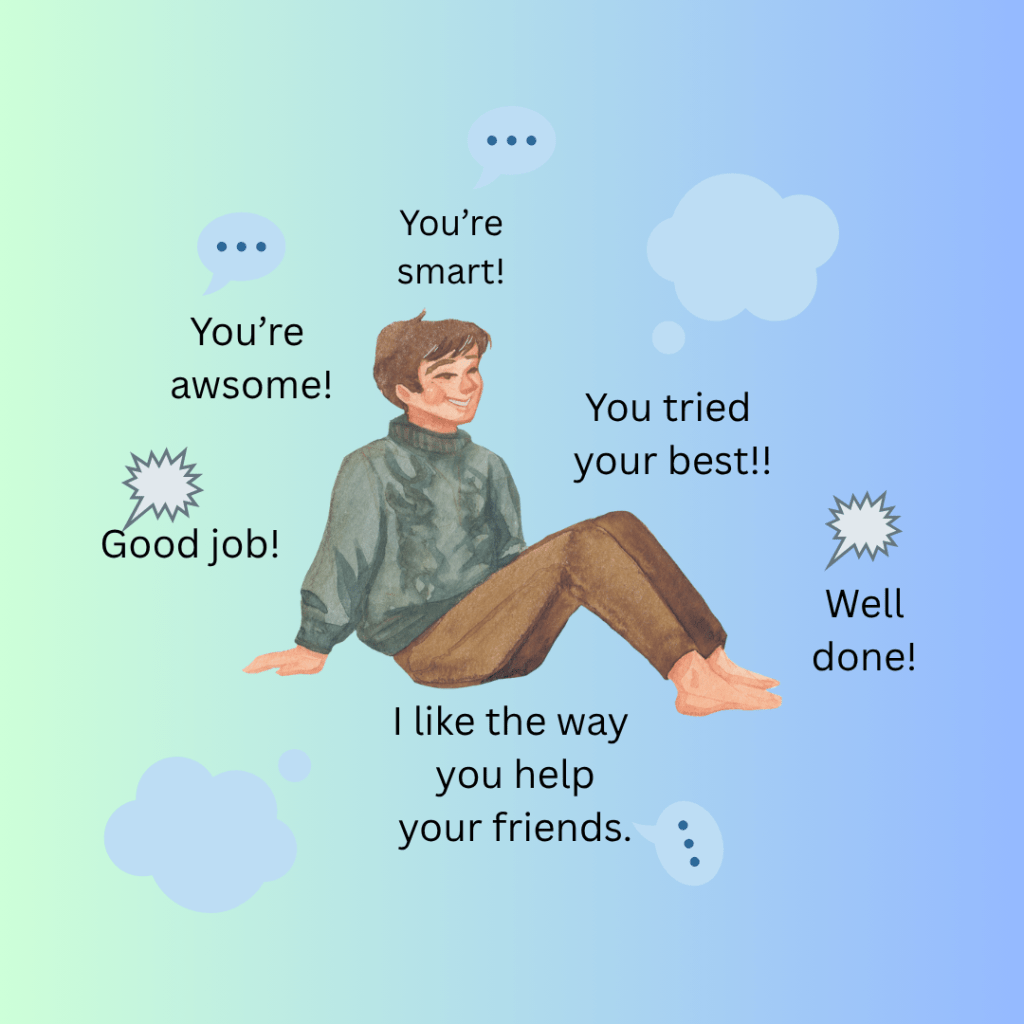
»Lastly, just as I said in the beginning that we should model the quality that we want to see in children there is another rule that we should praise the qualities we want to see in children. So whenever children show empathetic behaviour do praise them and praise specifically what action you really appreciate whether they helped someone, whether shared their tiffin or toys with friends or just sat with someone who was lonesome.
In my opinion, if we are able to instil empathy at an early age, we empower the next generation to build a safer and more compassionate world.
🎵You laugh at me because I’m different 🎶 went a song by an American musician Kurt Cobain.
ᴖ̈ Yet it’s no laughing matter. It’s tragic. In a recent incident two innocent young men from Tripura (a northeastern state in India) were brutally stabbed in a marketplace. One succumbed to injuries and the younger brother’s condition continues to be critical. This happened in December 2025, in the capital of Uttarakhand (northern part of India).
Their fault? Their facial features. They looked different and a group of men started passing racist slurs and called them names. The boy protested and asserted his Indian identity, and this cost him his life. A young life lost, irretrievably!🥀
And this is not a one off. This happened earlier and may happen again.
✦ Munish Tamang, teacher at the university of Delhi, wrote (IE Jan 3, 26) that he himself as somebody from northeast often faced this derision and humiliation and describes an incident when the students in the examination hall passed racist comments when he was invigilating. Imagine the gall!
And when people can do this to someone who is the authority what they would not do to young people who are vulnerable. If he thought he could get away by doing this to a teacher, what must be his daily interactions with his peers. Tamang observes that racial discrimination lurks everywhere, in the educational institutions, local neighbourhoods, markets and public transport.
❓Reason? Some say the perpetrators are not booked. True, this often is the case. But this is not the genesis of such crimes, nor is this a permanent solution. Punishment can only be a superficial and short term deterrent. We need to look deeper. Why people act so violently even without any provocation? Who gave them licence to kill? What needs to change is the racist mindset.
🫶The society needs to be sensitized to embrace diversity. We need to foster empathy, the ability to be aware of the feelings of others and imagine what it would be like to be in their position (or in their shoes). Empathy lays the groundwork for positive relationships, a peaceful and harmonious world.
⁉️Who will do this? On whom lies the great onus?
I leave you here with these questions. One mindful moment at a time –✨
“I’d love to hear your thoughts or answers—just leave them in the comments!”🗫
⋙Next blog is about strategies that can foster and promote empathy among children so that they live in a safer world🌍
Praise is a skill, not just a spontaneous utterance.It is a powerful tool in the hands of those who are responsible for children’s education and upbringing. Like all powerful tools it has to be used carefully and mindfully.
Children instinctively respond to praise. Much before their language develops they recognize praise in your smile and in your eyes. And when they sense your approval and appreciation they repeat the same act again and again. Just to please you. The right praise, offered at the right moment and in the right manner can work wonders.
I think BF Skinner did a great service to mankind by propounding Learning by Conditioning and its key concept of reinforcement. Through his experiments he showed that behaviours followed by a reward are more likely to be repeated. And praise is one such reward. A child can be rewarded in other ways too, with a gift, with a treat, but immediate praise is the most handy and effective award. If used skilfully, this tool can mould the child the way you want and you’ll find that gradually your nagging is also tailing off. So, it’s like getting double benefit, getting two-for-one. ‘Spare the rod, spoil the child’ is old school. The proverbial rod can be done away with. Punishment doesn’t bring any lasting change, instead it causes anger and hostility. Well, our focus here is not the rod, but praise and how it can be used bring desired changes in the child behaviour. Yes, Change is possible!
Which compliments would motivate the child and reinforce the desirable behaviour?
Here’s my manual on how to pack more power to praise –
✦︎What to praise?
Praise the behaviour you want to reinforce. Let’s say, you want the child to keep her things properly, or to be polite and helping to her friends in the class or to be ready on time for school. Depending on the age and developmental stage of the child, identify the behaviour you want the child to repeat.
Talk to the child about the importance of a good habit/behaviour you want her to acquire. Talk, connect without being after the child about the same thing all the time, nor expect complete compliance or perfect behaviour immediately. For the sake of peace you can ignore the undesired behaviour once in a while, but don’t ignore it when the child takes even a tiny step in the right direction, that’s your opportunity, seize it. Small efforts bring big change. This is positive psychology. This is positive parenting. Be alert, catch these small steps, these small moments, and let the child know that her efforts are recognised and appreciated, ‘Today you got ready earlier than yesterday, next time try to get ready by…’ ‘I really like you are trying to be on time’ ‘your table/shelf looks tidy today. Thanks for organising it so well.’ ‘You let your friend play with your ball. That’s good.’ The smallest progress should be made a news for the child and other family members or for the class. As I often say ‘News of the difference makes a difference.’ Not just verbally, offer nonverbal praise too, smile, hug, touch, gentle look would give more power to your words.
✦︎When to praise?
As soon as you notice improved behaviour or as soon as possible. Delayed praise brings diminished returns. Sometimes for practical reasons you cannot offer praise immediately which shouldn’t be a cause of concern, take it easy. Parenting is not about perfection. You can even convey through someone else if that is possible. That also works well. Child would feel motivated when someone at home will tell her ‘Pa is pleased that you learnt your lesson all by yourself.’
I recall an incident. On one occasion my colleague conveyed my genuine praise to my 12th grade student who had lately started taking more interest in studies. While she was taking my proxy she told him ‘Renu ma’am was very happy with your work. She told me you have acquired a good understanding of the concepts and you express yourself beautifully.’ Need I tell you this communication boosted that student’s self-esteem forever and he started participating in my class more actively. It was so thoughtful my friend to communicate my genuine praise to the right person.And praise works for all children irespective of their age. It will make lasting changes in the behaviour.
✦︎How to praise?
Don’t wait for the perfect result. Don’t keep telling ‘Not good enough, try harder.’ It’s so demotivating. One statement can put the child off the track. Instead say, ‘You’re trying really hard, you’ll get there. This is how we all learn.’ Focus on effort, outcome can wait.Doesn’t The Bhagwat Gita also teach the same thing? Focus on your actions and not on the result of your actions.
•Again praise actions, behaviour, not the personality. Say ‘I like that you always talk to your elders with respect’ and not ‘you are a nice girl’ ‘you are a genius’etc.
•The more specific the praise, the more effective it will be in reinforcing the desired behaviour.
•Let non verbal praise complement your words of praise.
✦︎How much praise is good and how much is too much?
If your praise is genuine and sincere, it can’t possibly be too much. It would be just right. According to Alan Kazdin, a Yale professor and Director of Yale Parenting Centre ‘You might be concerned about praise spoiling the child. But both research and clinical experience suggests this is not really an issue.’ He further adds that we are not likely to praise too much because of our negativity bias which means our tendency to look for what is wrong.
🚦A word of caution here:
Heaping the child with compliments for nothing particular will do more harm than good. Also, use praise for reinforcement, not for coaxing and manipulation.
Thus, praise is a skill and a very crucial onefor parents and educators to acquire in order to modify children’s behaviour and inculcate growth mindset in them.Developing this skill involves continuous practice and refinement.
🗪 I’d love to know what’s your take on this subject? Leave your thoughts in the comment box.
To blog or not to blog. The long drawn dilemma is over and here I am. This blog that has been gestating in my mind for quite some time has finally arrived!
Roots and Wings is all about nurturance, care, education. To dwell on the significance of the roles of parents, caregivers and educators in raising children and shaping future would mean stating the obvious. I said ‘parents, care givers and educators’, but actually, the line separating them often blurs, often their roles merge, for it’s the child who is at the centre.
This is the space for sharing ideas, advice and support based on Positive Psychology. Positive Psychology is the scientific study of human flourishing and fostering well-being.While traditional psychology focuses on illness and dysfunction, positive psychology focuses on understanding and promoting human strengths, positive emotions, happiness, growth, development.
My life has mostly revolved around children, mine and many more. M SC Counselling and Family Therapy, internship at the GMERS Civil Hospital, training to train teachers and my teaching years, all fuelled my interest in child and adolescent behaviour and positive psychology.
I now feel impatient to share my learnings and insights, knowledge and experience with all. Let my vibe attract my tribe!