ꜛ The above quote resonates deeply with me. It suggests a powerful yet simple idea: we can learn something from everyone we meet. The only requirement is where we choose to place our focus. If we train ourselves to notice strengths, qualities, and positives in others, every interaction becomes an opportunity for growth, IF, if we “have a heart that watches and receives” (expression borrowed from the great english poet William Wordsworth)
›This way of thinking closely aligns with the essence of positive psychology—a strength-focused approach. What we focus on grows. If we train our eyes to see gems, the world begins to feel richer, wiser, and more generous.
› At the same time, learning is not just about others—it is about our willingness to be taught. If you are truly willing to learn, every experience and interaction—whether positive or negative—holds a lesson. But for that, one must be teachable. When we cultivate that openness, the entire universe becomes our teacher.
›In his poem ‘The Tables Turned’ William Wordsworth captured this beautifully when he wrote, “Let nature be your teacher.” He believed that:
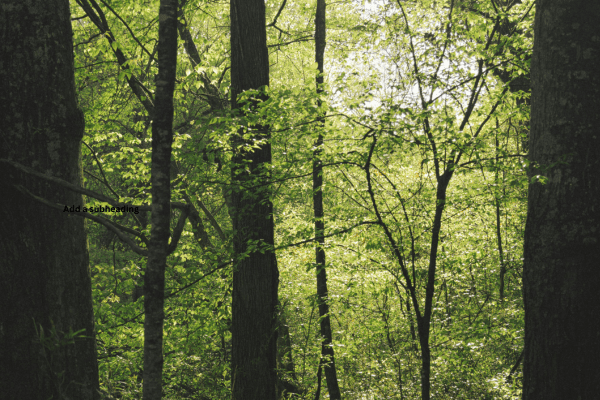
❝One impulse from a vernal wood
May teach you more of man,
Of moral evil and of good,
Than all the sages can.❞
∗(From: The Tables Turned) These lines remind us that wisdom is woven into the world around us.
››As I write, I’m reminded of a poem I encountered in school, probably in the fifth grade. At that age, perhaps we are too young to fully grasp its depth, yet the message quietly stays with us. Meaning unfolds, as we grow. The image below is found on the internet.
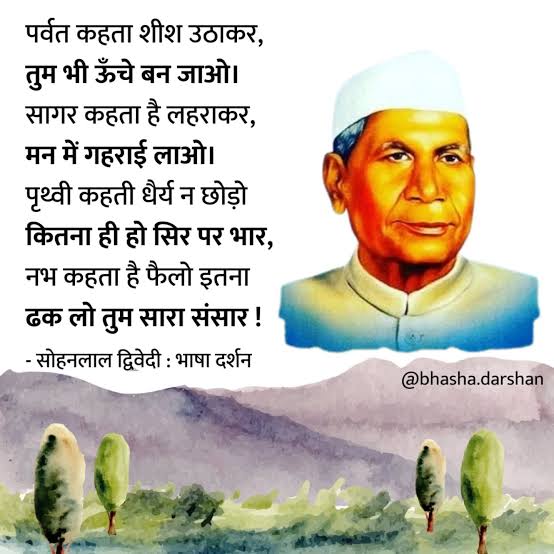
››I sum up the main idea that the poem conveys. It draws lessons from nature in the most beautiful way. The mountain, standing tall and firm, teaches us to hold our heads high—to be grounded, resilient, and unwavering in our values. The ocean, vast and deep, reminds us that our thoughts, too, should have depth, encouraging us to think critically rather than remain superficial.
›The earth, patient and enduring, teaches us to carry our responsibilities without complaint. And the sky, limitless and expansive, inspires us to grow beyond boundaries—to embrace a perspective wide enough to include the whole world.
🎯The poem is really about developing essential life skills.🪴 It speaks of courage—the courage to stand for what is right. It nurtures assertiveness, resilience, and the ability to think deeply. It encourages problem-solving and thoughtful decision-making. And above all, it fosters empathy—the kind that allows us to consider every soul on this planet.
›Perhaps the lesson is simple yet profound: if we are willing to learn, teachers are everywhere. In people. In experiences. In nature. In life itself. 🌿⚘.⋆🍃༄
✍️ Over to you: What’s your take? Share your thoughts in the comments below! 💬
🌸Let‘s connect on👇

