Tag: education

  • Raising Empathy in a Fractured World

     šŸ”–Before you judge someone, walk a mile in their shoes. ๋࣭ ā­‘ ą¹‹ą£­ ā­‘

    This old adage is all about empathy and I wish to expand it a bit. Before you heckle, harass, bully, insult, isolate or deride someone imagine yourself in their place. All the violence, conflict, poverty, corruption that we see around or read about stems from lack of empathy. Violence arises when we lose the ability to see others as individuals, when  we fail to understand other people’s perspective and feel their pain.

    āœ§Ė– Therefore, to create harmonious and peaceful world society needs to be sensitized. We need to foster empathy, the ability to be aware of the feelings of others and imagine what it would be like to be in their position. Empathy lays the groundwork for positive relationships, and self awareness and social awareness are the primary requirements for kindling empathy.

    āœ§Ė– Fostering empathy is the ultimate antidote to violence. But who will do this? On whom lies the great onus? Like everything else this should also begin from home. Herein comes the role of us adults, greater responsibility is on teachers and guardians.

    āœ§Ė– Let’s see, ā€˜Can empathy be taught like a branch of knowledge?  Can empathy be learnt like a skill? Or can empathy be passed as a piece of information?’ ā€˜No’. Empathy is neither knowledge, nor skill nor information. It is the matter of heart, feelings, sensibilities. Empathy can be stirred, fostered, nurtured in children.

    āž¤ Given below are some of strategies that can be used effectively at home and schools for modelling and developing empathy over time. These strategies are more effective if fine-tuned according to the child’s age:

    »The thumb rule is we should model whatever qualities we want to inculcate in children. So first step is to show empathy to children and how do we show it? By listening to them, by trying to see their points of views and by not dismissing their emotions.

    »Discuss emotions with them. Ask how they are feeling, what bodily sensations they when they have big emotions. You may share your own emotions using I statements.

    Ā»šŸ“šStories and pictures offer great opportunities to discuss emotions. There are several stories that can stir empathy, can move one, for instance stories written by Hans Anderson, Munshi Premchand, Charles Dickens, O Henry, Leo Tolstoy to name a few. We can take age appropriate stories and discuss how those characters feel in certain circumstances. For younger kids pictures can be used for discussing emotions so they can relate emotions to facial expressions and posture. This helps them understand other people’s feelings and emotions better.  šŸ˜ŠšŸ˜”šŸ„¹

    Ā»Then, role play can be used in classrooms to activate empathy in children. Role play is actually, rather virtually putting one in someone else’s shoes. Role play can be used for embracing diversity, for understanding other people’s problems, behaviours, needs or viewpoints. Playing the role of someone differently abled or from different backgrounds or different age groups is a nice way to understand them. I’ll give two incidents that show how role play works up empathy. šŸŽ­

    On the Teacher’s Day, September 5th students run the school, they get into the roles of all the teaching and non-teaching staff and admin, as is the common practice in our country. One of my eighth graders, who was assigned the role of the peon for the day shared with the class later ā€˜This was the first time I realized how much work and responsibility the school peon carries every day. How hard his job is and how helpful he is for us.’ It was an important message. Apart from empathy, it also taught something about the dignity of labour.
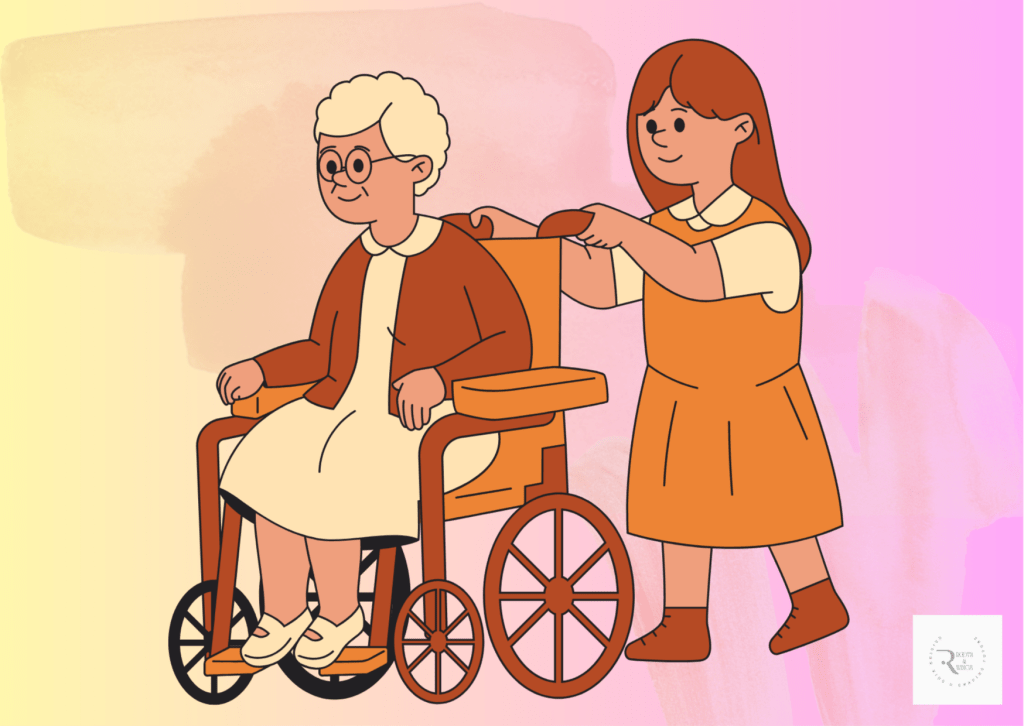
    In another example, my class of 10–11-year-olds was doing a lesson ā€˜A Different Kind of School’ which is about a school where Miss Beam, the principal had a unique method of teaching empathy. On certain days in the school some students were blindfolded or bandaged while other students had to help them. They did not have any disability but this was how they were to learn what it meant and how they could help others too. While doing this lesson I too suggested if we may also have similar activity and all the students welcomed the idea in one voice. And when one student did the role of a boy with an injured leg others were ready to offer help. And later students shared how they felt.

    »Discussing news events, when children are old enough to discuss these, is another effective way of activating empathy. For example, the event I discussed in my previous post may make them more inclusive and more understanding. They may realize that people who are different from them too have their rights and they too have similar feelings and emotions and should be respected as such. The news gives enough opportunities to discuss issues like equality, justice, diversity, humanity etc.

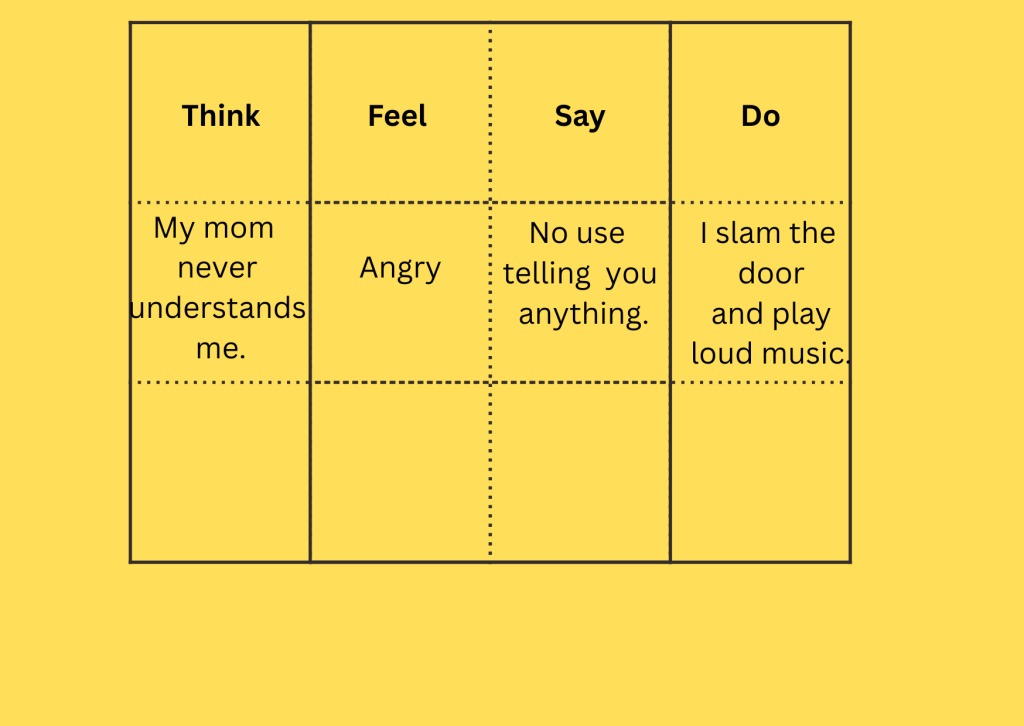
    »In order to discuss emotions children may be shown the table to complete. Table with columns think, feel, say, do, as shown below. This can be adapted according to their ages. Younger ones can do with the help of emotion chart. older ones can do it through stories, pictures, characters, news. This makes them self aware and socially aware as well.
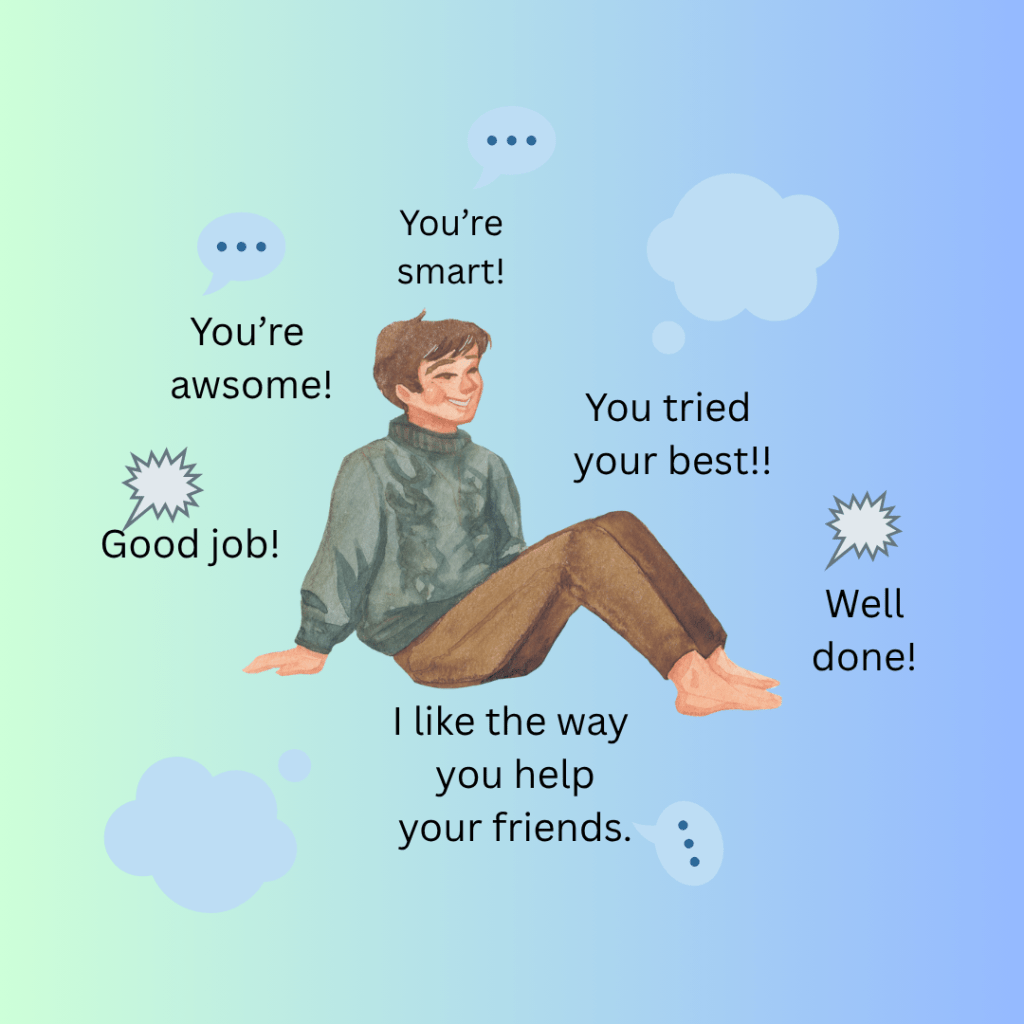
    »Lastly, just as I said in the beginning that we should model the quality that we want to see in children there is another rule that we should praise the qualities we want to see in children. So whenever children show empathetic behaviour do praise them and praise specifically what action you really appreciate whether they helped someone, whether shared their tiffin or toys with friends or just sat with someone who was lonesome.

    In my opinion, if we are able to instil empathy at an early age, we empower the next generation to build a safer and more compassionate world.

    Thoughts? šŸ’¬just leave them in the comments!

    🌸Letā€˜s connect onšŸ‘‡

    Instagram

    Facebook

  • Empathy Powers Peace and Harmony

    šŸŽµYou laugh at me because I’m different šŸŽ¶ went a song by  an American musician Kurt Cobain.

    į“–Ģˆ Yet it’s no laughing matter. It’s tragic. In a recent incident two innocent young men from Tripura (a northeastern state in India) were brutally stabbed in a marketplace. One succumbed to injuries and the younger brother’s condition continues to be critical. This happened in December 2025, in the capital of Uttarakhand (northern part of India).

    Their fault? Their facial features. They looked different and a group of men started passing racist slurs and called them names. The boy protested and asserted his Indian identity, and this cost him his life. A young life lost, irretrievably!šŸ„€

      And this is not a one off. This happened earlier and may happen again.

    ✦ Munish Tamang, teacher at the university of Delhi, wrote (IE Jan 3, 26) that he himself as somebody from northeast often faced this derision and humiliation and describes an incident when the students in the examination hall passed racist comments when he was invigilating. Imagine the gall!

    And when people can do this to someone who is the authority what they would not do to young people who are vulnerable. If he thought he could get away by doing this to a teacher, what must be his daily interactions with his peers. Tamang observes that racial discrimination lurks everywhere, in the educational institutions, local neighbourhoods, markets and public transport.

    ā“Reason? Some say the perpetrators are not booked. True, this often is the case. But this is not the genesis of such crimes, nor is this a permanent solution. Punishment can only be a superficial and short term deterrent. We need to look deeper. Why people act so violently even without any provocation? Who gave them licence to kill? What needs to change is the racist mindset.

    🫶The society needs to be sensitized to embrace diversity. We need to foster empathy, the ability to be aware of the feelings of others and imagine what it would be like to be in their position (or in their shoes). Empathy lays the groundwork for positive relationships, a peaceful and harmonious world.

    ā‰ļøWho will do this? On whom lies the great onus?

    I leave you here with these questions. One mindful moment at a time ā€“āœØ

    “I’d love to hear your thoughts or answers—just leave them in the comments!”šŸ—«

    ā‹™Next blog is about strategies that can foster and promote empathy among children so that they live in a safer worldšŸŒ

  • The Power of Praise

    Praise is a skill, not just a spontaneous utterance. It is a powerful tool in the hands of those who are responsible for children’s education and upbringing. Like all powerful tools it has to be used carefully and mindfully.

    Children instinctively respond to praise. Much before their language develops they recognize praise in your smile and in your eyes. And when they sense your approval and appreciation they repeat the same act again and again. Just to please you. The right praise, offered at the right moment and in the right manner can work wonders.

    I think BF Skinner did a great service to mankind by propounding Learning by Conditioning and its key concept of reinforcement. Through his experiments he showed that behaviours followed by a reward are more likely to be repeated. And praise is one such reward. A child can be rewarded in other ways too, with a gift, with a treat, but immediate praise is the most handy and effective award. If used skilfully, this tool can mould the child the way you want and you’ll find that gradually your nagging is also tailing off. So, it’s like getting double benefit, getting two-for-one. ā€˜Spare the rod, spoil the child’ is old school. The proverbial rod can be done away with. Punishment doesn’t bring any lasting change, instead it causes anger and hostility. Well, our focus here is not the rod, but praise and how it can be used bring desired changes in the child behaviour. Yes, Change is possible!

    Which compliments would motivate the child and reinforce the desirable behaviour?

    Here’s my manual on how to pack more power to praise –

    āœ¦ļøŽWhat to praise?

    Praise the behaviour you want to reinforce. Let’s say, you want the child to keep her things properly, or to be polite and helping to her friends in the class or to be ready on time for school. Depending on the age and developmental stage of the child, identify the behaviour you want the child to repeat.

    Talk to the child about the importance of a good habit/behaviour you want her to acquire. Talk, connect without being after the child about the same thing all the time, nor expect complete compliance or perfect behaviour immediately. For the sake of peace you can ignore the undesired behaviour once in a while, but don’t ignore it when the child takes even a tiny step in the right direction, that’s your opportunity, seize it. Small efforts bring big change. This is positive psychology. This is positive parenting. Be alert, catch these small steps, these small moments, and let the child know that her efforts are recognised and appreciated, ā€˜Today you got ready earlier than yesterday, next time try to get ready by…’ ā€˜I really like you are trying to be on time’ ā€˜your table/shelf looks tidy today. Thanks for organising it so well.’ ā€˜You let your friend play with your ball. That’s good.’ The smallest progress should be made a news for the child and other family members or for the class. As I often say ā€˜News of the difference makes a difference.’ Not just verbally, offer nonverbal praise too, smile, hug, touch, gentle look would give more power to your words.

    āœ¦ļøŽWhen to praise?

    As soon as you notice improved behaviour or as soon as possible. Delayed praise brings diminished returns. Sometimes for practical reasons you cannot offer praise immediately which shouldn’t be a cause of concern, take it easy. Parenting is not about perfection. You can even convey through someone else if that is possible. That also works well. Child would feel motivated when someone at home will tell her ā€˜Pa is pleased that you learnt your lesson all by yourself.’

    I recall an incident. On one occasion my colleague conveyed my genuine praise to my 12th grade student who had lately started taking more interest in studies. While she was taking my proxy she told him ā€˜Renu ma’am was very happy with your work. She told me you have acquired a good understanding of the concepts and you express yourself beautifully.’ Need I tell you this communication boosted that student’s self-esteem forever and he started participating in my class more actively. It was so thoughtful my friend to communicate my genuine praise to the right person. And praise works for all children irespective of their age. It will make lasting changes in the behaviour.

    āœ¦ļøŽHow to praise?

    Don’t wait for the perfect result. Don’t keep telling ā€˜Not good enough, try harder.’ It’s so demotivating. One statement can put the child off the track. Instead say, ā€˜You’re trying really hard, you’ll get there. This is how we all learn.’ Focus on effort, outcome can wait. Doesn’t The Bhagwat Gita also teach the same thing? Focus on your actions and not on the result of your actions.

    •Again praise actions, behaviour, not the personality. Say ā€˜I like that you always talk to your elders with respect’ and not ā€˜you are a nice girl’ ā€˜you are a genius’ etc.

    •The more specific the praise, the more effective it will be in reinforcing the desired behaviour.

    •Let non verbal praise complement your words of praise.

    āœ¦ļøŽHow much praise is good and how much is too much?

    If your praise is genuine and sincere, it can’t possibly be too much. It would be just right. According to Alan Kazdin, a Yale professor and Director of Yale Parenting Centre ‘You might be concerned about praise spoiling the child. But both research and clinical experience suggests this is not really an issue.’ He further adds that we are not likely to praise too much because of our negativity bias which means our tendency to look for what is wrong.

    🚦A word of caution here:

    Heaping the child with compliments for nothing particular will do more harm than good. Also, use praise for reinforcement, not for coaxing and manipulation.

    Thus, praise is a skill and a very crucial one for parents and educators to acquire in order to modify children’s behaviour and inculcate growth mindset in them. Developing this skill involves continuous practice and refinement.

    šŸ—Ŗ I’d love to know what’s your take on this subject? Leave your thoughts in the comment box.

    🌸Let‘s connect onšŸ‘‡

    Instagram

    Facebook

  • Roots Give Strength, Wings Empower

    To blog or not to blog. The long drawn dilemma is over and here I am. This blog that has been gestating in my mind for quite some time has finally arrived!

    Roots and Wings is all about nurturance, care, education. To dwell on the significance of the roles of parents, caregivers and educators in raising children and shaping future would mean stating the obvious. I said ‘parents, care givers and educators’, but actually, the line separating them often blurs, often their roles merge, for it’s the child who is at the centre.

    This is the space for sharing ideas, advice and support based on Positive Psychology. Positive Psychology is the scientific study of human flourishing and fostering well-being.While traditional psychology focuses on illness and dysfunction, positive psychology focuses on understanding and promoting human strengths, positive emotions, happiness, growth, development.

    My life has mostly revolved around children, mine and many more. M SC Counselling and Family Therapy, internship at the GMERS Civil Hospital, training to train teachers and my teaching years, all fuelled my interest in child and adolescent behaviour and positive psychology.

    I now feel impatient to share my learnings and insights, knowledge and experience with all. Let my vibe attract my tribe!

    One mindful moment at a time – see you soon! ✨

    Follow us here:

    Instagram

    Facebook