I was people watching while waiting for someone at the airport arrivals area. People at the arrivals generally look happy to be joined by their families and friends.They greet and hug their loved ones. They might have waited for this moment for a long time.
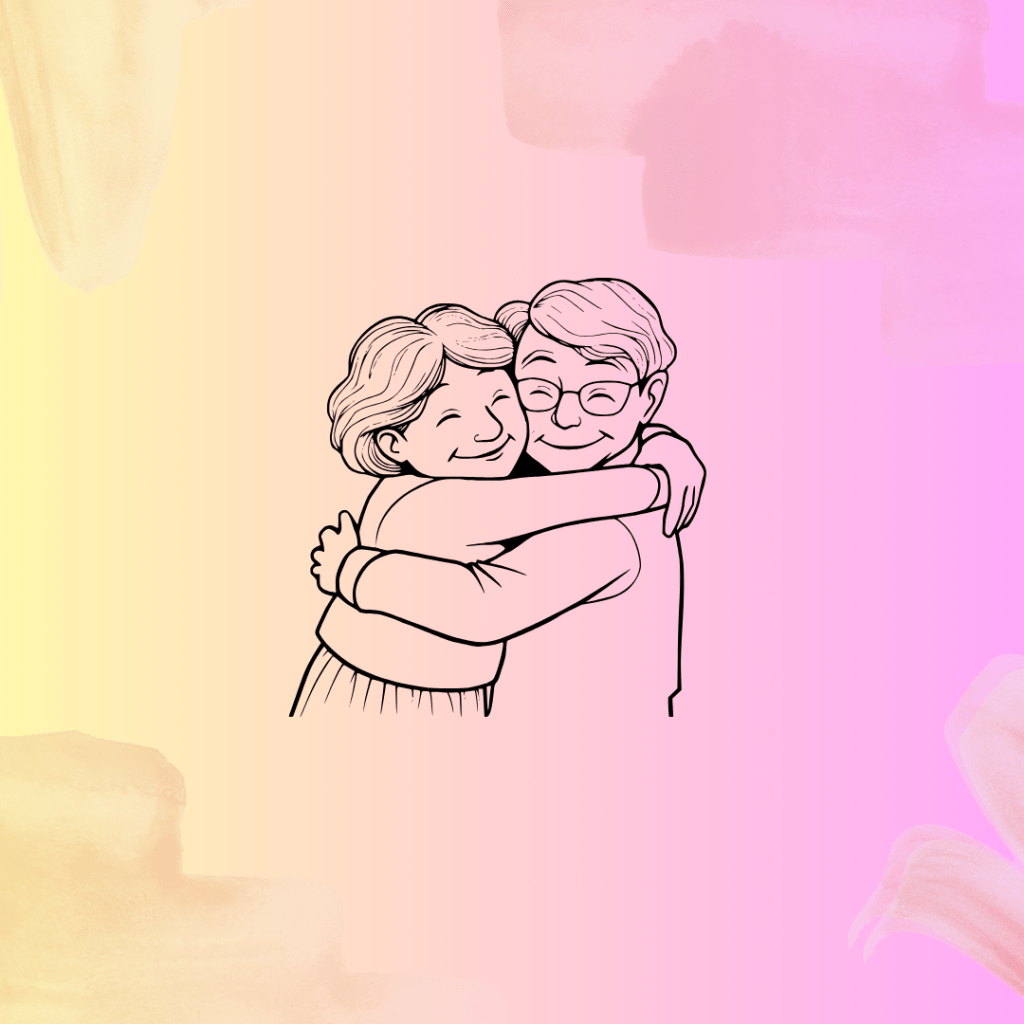
One such union I watched up close. It looked like a homecoming of a young man in late twenties. First the mother, so I assumed, hugged him and gave a peck on the cheek. The young man looked embarrassed being so petted by his mother like this. Then the Indian father who looked equally delighted to see his son but being less expansive in his affection gave a pat on his shoulder. Then came the younger sister who was eagerly waiting for her turn and lifted herself a little to hug her brother whose smiling face was visible to me while the girl’s back was turned towards me. At this moment I, an indifferent observer, found myself struggling to hold back my tears for I didn’t want to be seen crying and I had no reason to. As the girl released her rather longish hug and turned her face, I could see her tears while the brother and the parents smiled a tender smile.
𖡎 How did that happen? I was observing only because all this was happening where I was standing and without any special interest. Still my eyes moistened when the little sister hugged her brother, though I did not see her tears.
Were the mirror neurons firing in my brain? 🧠⚡🧠
𖡎 The teacher in me was intrigued with this behaviour. And the first thought I had was if this knowledge of mirror neurons could help teachers, parents and children. I had read about mirror neurons in Dr John Medina’s book ‘Brain Rules’, but I searched some more. This is what I learnt-
Mirror neurons are cells whose activity reflect their surroundings. Giacomo Rizzolatti, an Italian neurophysiologist and his team are credited with discovering mirror neurons. Their paper on mirror neurons was published in 1990. While performing an experiment on macaque monkeys they observed that the neurons that fired when monkeys picked raisins, also fired when they saw someone else doing the same and even when monkeys did not actually see someone doing it. Later research suggested that mirror neurons respond not so much the physical movement itself, but the intention. This explains my behaviour that day at the airport arrivals area. 🧠⚡🧠
Having understood the mirror neuron phenomenon I started wondering how that can be applied to in classrooms and home settings and how mirror neurons can support learning. ⋆。°·☁︎
🚨The first thing we have to know that there’s a mirror brain and if there is, we adults can make use of this in the classroom and home to inculcate the desired behaviour. I mean, we can use this brain behaviour to our advantage in shaping children’s behaviour. This corroborates Albert Bandura’s Social Learning Theory which emphasises imitation and modelling.
Teachers and guardians can model enthusiasm, curiosity, respect and even thinking processes by solving a problem aloud. and verbalizing thought processes. Self awareness is the key to modelling.
🚨We can teach children calm, emotional regulation, respond to signals by modelling responses intentionally and consistently. And there’s enough evidence to show that calm, secure and emotionally regulated children not only perform better academically, but are more emotionally intelligent and socially competent also.
❝Don’t worry that your children don’t listen to you, worry that they watch you ❞ This famous parenting quote does encapsulate profound wisdom. So next time you yell at children or tell them not to fritter away time online, remember the mirror brain.
Have more thoughts or tips on this? Share those in the comments below. 💭
🌸Let‘s connect on👇
 Roots n Wings