I look for meaning in small everyday experiences. Here are a few ordinary moments that have stayed with me.
⋆˙⟡ It was my English class of ninth graders. We were practicing simple present tense. The students had to describe someone’s daily routine. One student chose her father.
“When my father wakes up he first checks his phone for half an hour. He gets ready, takes breakfast. Sometimes during breakfast he watches reels . He leaves for work at 9:30 morning and comes back at 6:30 pm. He has tea with my mother and they watch TV for an hour. When my mother cooks dinner, he watches news. He goes to sleep at 12 and before that he likes to play video games.”
That was the routine!
She wasn’t complaining. She was just describing… normal life.
⋆˙⟡
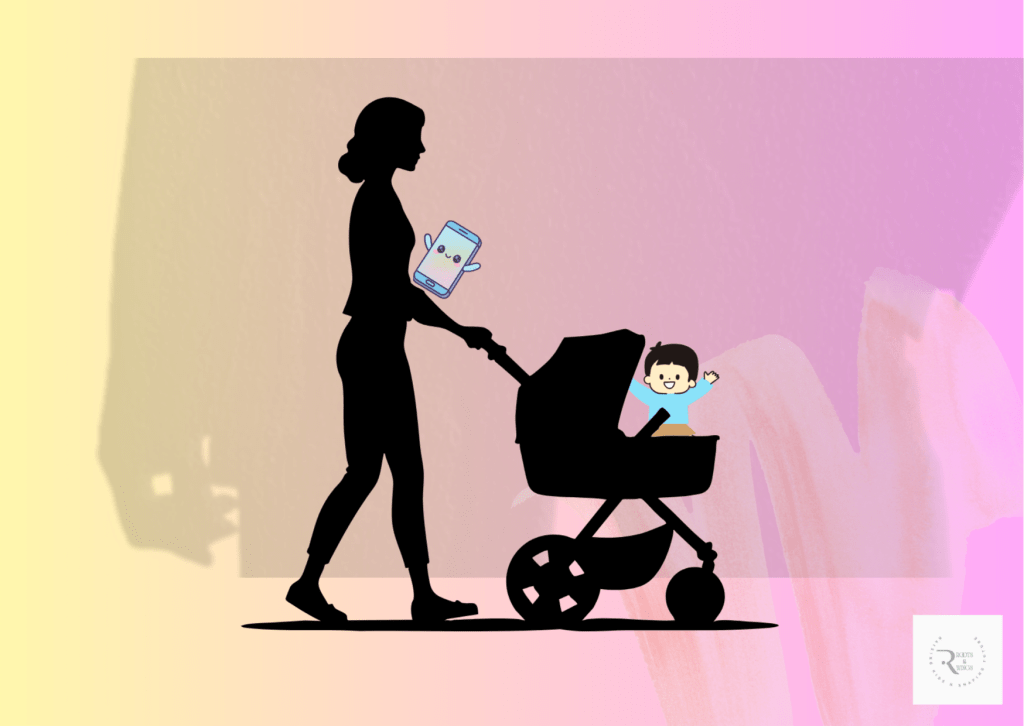
🍀Now shift to a park in my neighbourhood. I’m just people watching from a distance. A woman takes the kid out on a stroller. There are trees there are flowers, and maybe butterfies. There’s a pond nearby and a playground. The child sits comfortably and takes in all that she can. The woman is pushing the stroller with one hand on autopilot and her other hand holds the phone, which in turn holds all her attention.
🌀I begin to turn it over in my mind and think while the child is actively navigating her world, that woman who could be a mother or a caretaker is losing a key moment to connect.
⋆˙⟡
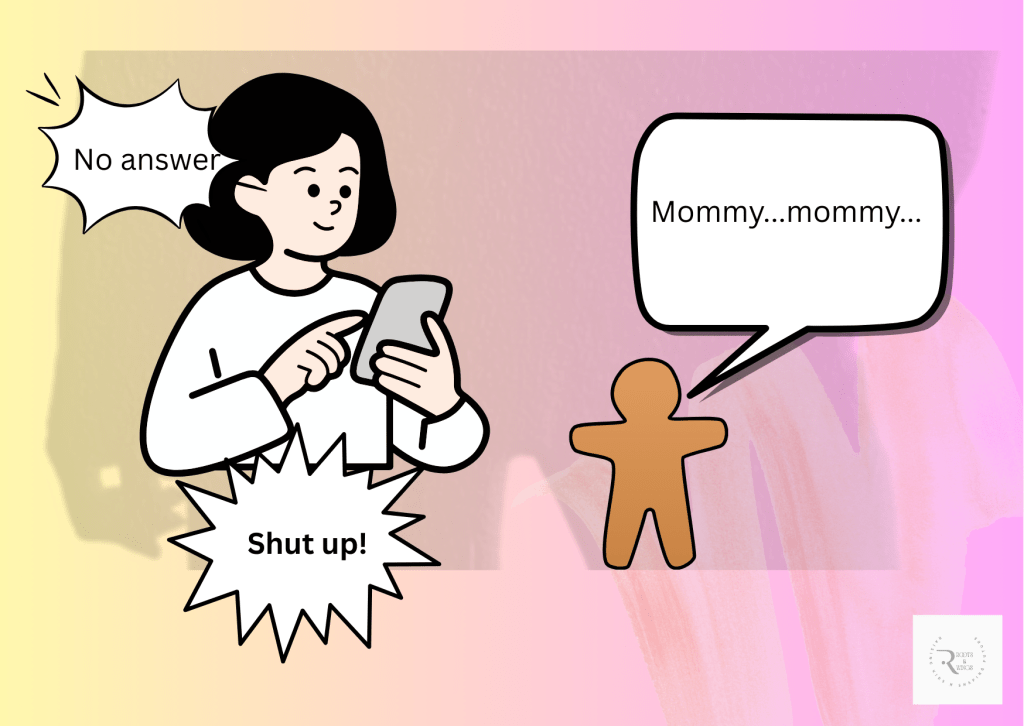
🎞️Now picture this. A mother immersed in the device in her palm.
The excited kid calls ‘Mommy…..mommy!’
No answer.
Mommy!
‘WHAT ⁉️’
N..nothing 😦
Child withdraws.
⋆˙⟡ Pause for thought. ᝰ.ᐟ
In all the three real life moments what message are the adults giving to the children?💬 If we don’t form meaningful connection with kids, how will kids share their feelings with us. Then there’s no point complaining that kids don’t listen to us.
🧩Parenting is not about perfection, it’s about connection. It’s not about eliminating screens, but being present for children. Maybe it begins with one small pause —with eye contact and one fully present moment.
In my next post, we’ll explore the often unnoticed power of modelling in parenting.
🗝️Three key areas where music can be used as an educational tool: ‣Classroom management; ‣Memory, retention and ‣concentration; Community building.
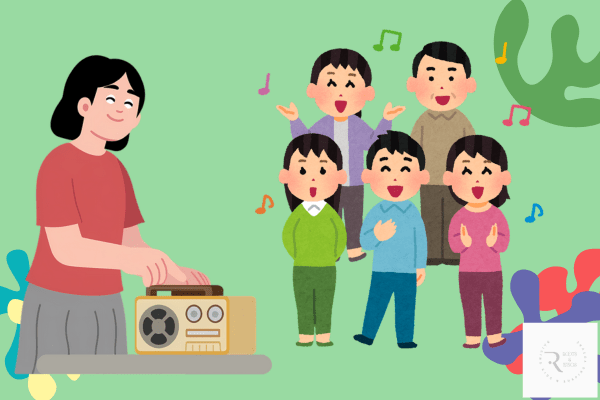
✧My previous post recounted some moments that revealed the magical effect of music on mind, on mood. If music can regulate emotions, reduce anxiety, build bonds, improve focus, then it definitely is a powerful tool for the social emotional development of children which in turn will sharpen their cognitive abilities and boost academic performance.
👉Here I share strategies for making intentional use of music in classrooms for better teaching learning experiences. These strategies are drawn from my personal reflections and practical insights based on myown teaching experience, my experience as a teacher trainer and from observing other colleagues:
⚡Classroom management- Morning assembly prayer and songs is a common routine in most schools that makes the students and teachers fresh, energetic to start the day with positive vibes. ⬩However, teachers would agree that the transition from one period to another, when one teacher leaves and the other enters or students move from one classroom to another, is always full of chaos and commotion.
⬩ In one of the schools I observed, instead of ringing piercing bell they play a Mozart Symphony or some instrumental music, to signal the end of one subject period. This, I realized, minimized the noise and chaos during transitions effectively.
⬩Tasks can be timed with music. Students work on the task till soft music continues and stop activity/exercise the as the music stops.
⬩For signalling- for better management some sound signals can be created to signify instructions like tidying up the room, filing out or for being quiet. Rainstick or some chimealso is useful.
⚡For memorizing- Music strengthens memory. For younger children, it is effective way of acquiring linguistic skills, and a very potent tool for memorizing as they repeat the same songs, poems often.
⬩Improving focus – Soft music helps concentrate so can be used in the classroom while students are at a writing task or drawing or reading silently. Teachers will have to check the volume which should be very soft and low so it does not itself become a distraction.
To improve focus if the students come back to their classroom after recess or sports period make them sit for two minutes with eyes closed while some soft music plays and they open eyes when th e music stops.🌱
⬩Music can come handy as a brain break activity. It has now been established through studies that brain breaks boost attention spans. Introduce 5 minutes activities every 25 minutes to refresh minds. And after breaks students returned ready to learn. 👩🏻💻📓✍🏻💡
⚡For Community building- Having a chant for their group or some group musical activities produce neurochemicals that energise (endorphins) and release social bonding hormone (oxytocin), thus fostering feelings of trust, connectedness among children. This community feeling is crucial for the children to feel safe and supported which is a prerequisite for better learning.
⚠️What is important is to choose music or songs keeping the age of the students in mind. Ensure that the music does not distract students from their task. Keep the music low unless the students are feeling dull and need to be energized and other classes are not disturbed.
▸Choose the strategies discreetly, overdoing reduces impact.
▸Also know your students. Through a little experimentation a teacher can find out what works with their class. Different groups have different preferences. One class I taught loved short stories over songs and I used to be on the look out for stories that I could squeeze into the lesson plan. But that’s the story for another day 😊
Sharing moments that reminded me that music doesn’t just entertain, it regulates, soothes and teaches calm.
🎬Picture this- Scene one. Train arrives at the platform. A lot of commotion. Passengers scurry towards the door chugging their luggage. Tempers look frayed. Anyone who has travelled on Indian railways can relate to this.
But today is different on this train from New Delhi to Ahmedabad. The train pulls in at the station, suddenly a beautiful melodious song from an old Hindi movie fills the compartment. And see the magic 🎼 No, hustle, no bustle, everybody moves forward, in a good mood, humming the same song. I can’t believe my eyes or ears. How come everyone looks so calm in a place so crowded❗
🎬Cut to classroom. Scene two. I am teaching a class of 17-year-olds. We have completed the lesson while there were still some ten minutes to go. Students chatter grows louder. I play the track ‘If you miss the train I’m on…’ on the audio. And to my surprise the chatter stops instantly. Soon students are bobbing their heads to the tune. 🎶
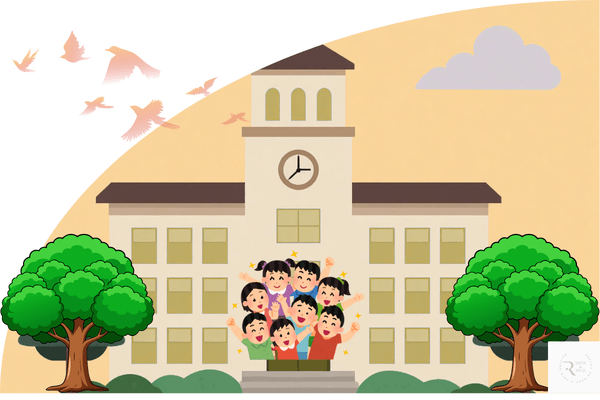
🎬Cut to Scene three- Morning assembly. The school boasts of a picturesque sylvan setting. The assembly ground is surrounded by trees. If you look up you can see fleet of birds. Every morning some prayer song and some other song or instrumental music is part of the morning assembly. Today the music suddenly disrupted may be due to power failure. And lo, all the birds fly down and perch on the trees forming a circle above the ground and from there rises a cacophony of birdsong. This is surreal! I never imagined that these winged creatures connect so well with assembly music every morning that they actually staged a protest at the disruption.
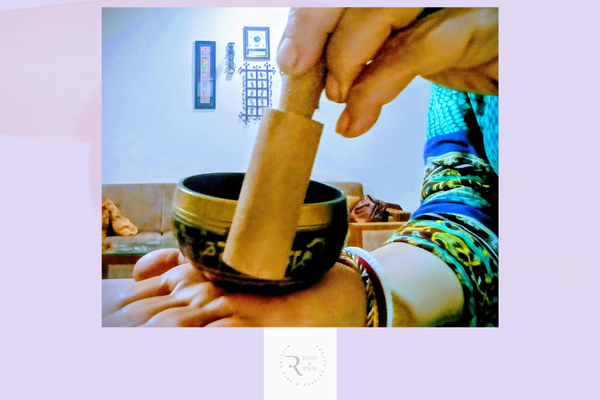
🎬Scene four. I am at the Uiversity of Rhode Island on an exchange program . We are attending a session at the URI Center for Nonviolence and Peace Studies, conducted by Thupten Tendhar, (a Geshe, or doctor of Buddhist studies). He gives us a topic for discussion. While we are busy exchanging ideas in groups, suddenly everybody’s attention is drawn to a deep, rich, resonant sound. Discussion stops. We all turn to find out the source of the deep, pulsating hum. I notice that on the left corner our trainer is tracing the rim of the bowl with the mallet. I am so fascinated with the sound and its effect that I decide I’d also use this tool when I conduct teacher training sessions.
Such is the calming effect of music on mind. Studies show that hosts of feelgood chemicals, like dopamine, oxytocin, serotonin are released when we listen to or play some soothing music. 🍃
Next post shares strategies how music can be used as an educational tool to achieve pedagogical goals.
🔖Before you judge someone, walk a mile in their shoes. ๋࣭ ⭑ ๋࣭ ⭑
This old adage is all about empathy and I wish to expand it a bit. Before you heckle, harass, bully, insult, isolate or deride someone imagine yourself in their place. All the violence, conflict, poverty, corruption that we see around or read about stems from lack of empathy. Violence arises when we lose the ability to see others as individuals, when we fail to understand other people’s perspective and feel their pain.
✧˖ Therefore, to create harmonious and peaceful world society needs to be sensitized. We need to foster empathy, the ability to be aware of the feelings of others and imagine what it would be like to be in their position. Empathy lays the groundwork for positive relationships, and self awareness and social awareness are the primary requirements for kindling empathy.
✧˖ Fostering empathy is the ultimate antidote to violence. But who will do this? On whom lies the great onus? Like everything else this should also begin from home. Herein comes the role of us adults, greater responsibility is on teachers and guardians.
✧˖ Let’s see, ‘Can empathy be taught like a branch of knowledge? Can empathy be learnt like a skill? Or can empathy be passed as a piece of information?’ ‘No’. Empathy is neither knowledge, nor skill nor information. It is the matter of heart, feelings, sensibilities. Empathy can be stirred, fostered, nurtured in children.
➤ Given below are some of strategies that can be used effectively at home and schools for modelling and developing empathy over time. These strategies are more effective if fine-tuned according to the child’s age:
»The thumb rule is we should model whatever qualities we want to inculcate in children. So first step is to show empathy to children and how do we show it? By listening to them, by trying to see their points of views and by not dismissing their emotions.
»Discuss emotions with them. Ask how they are feeling, what bodily sensations they when they have big emotions. You may share your own emotions using I statements.
»📚Stories and pictures offer great opportunities to discuss emotions. There are several stories that can stir empathy, can move one, for instance stories written by Hans Anderson, Munshi Premchand, Charles Dickens, O Henry, Leo Tolstoy to name a few. We can take age appropriate stories and discuss how those characters feel in certain circumstances. For younger kids pictures can be used for discussing emotions so they can relate emotions to facial expressions and posture. This helps them understand other people’s feelings and emotions better. 😊😔🥹
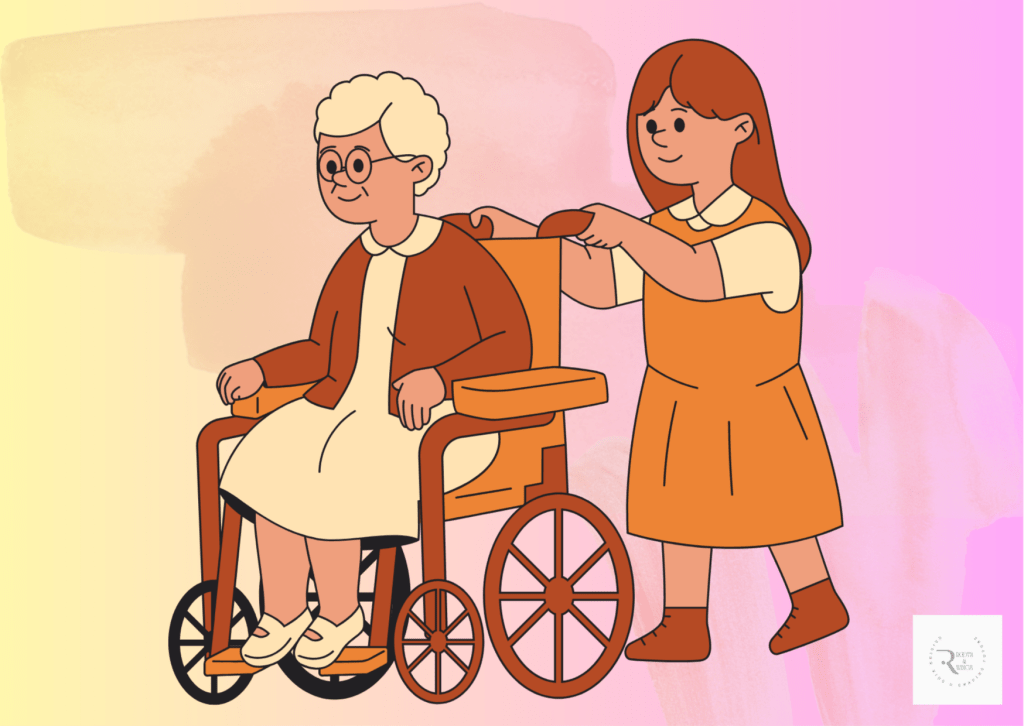
»Then, role play can be used in classrooms to activate empathy in children. Role play is actually, rather virtually putting one in someone else’s shoes. Role play can be used for embracing diversity, for understanding other people’s problems, behaviours, needs or viewpoints. Playing the role of someone differently abled or from different backgrounds or different age groups is a nice way to understand them. I’ll give two incidents that show how role play works up empathy. 🎭
On the Teacher’s Day, September 5th students run the school, they get into the roles of all the teaching and non-teaching staff and admin, as is the common practice in our country. One of my eighth graders, who was assigned the role of the peon for the day shared with the class later ‘This was the first time I realized how much work and responsibility the school peon carries every day. How hard his job is and how helpful he is for us.’ It was an important message. Apart from empathy, it also taught something about the dignity of labour.
In another example, my class of 10–11-year-olds was doing a lesson ‘A Different Kind of School’ which is about a school where Miss Beam, the principal had a unique method of teaching empathy. On certain days in the school some students were blindfolded or bandaged while other students had to help them. They did not have any disability but this was how they were to learn what it meant and how they could help others too. While doing this lesson I too suggested if we may also have similar activity and all the students welcomed the idea in one voice. And when one student did the role of a boy with an injured leg others were ready to offer help. And later students shared how they felt.
»Discussing news events, when children are old enough to discuss these, is another effective way of activating empathy. For example, the event I discussed in my previous post may make them more inclusive and more understanding. They may realize that people who are different from them too have their rights and they too have similar feelings and emotions and should be respected as such. The news gives enough opportunities to discuss issues like equality, justice, diversity, humanity etc.
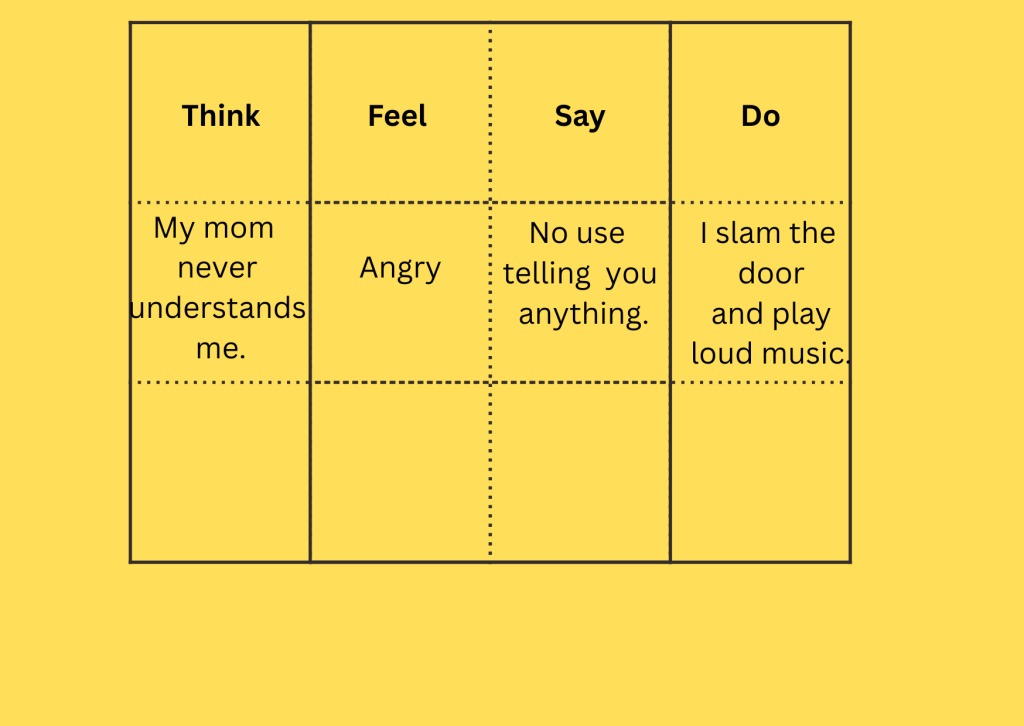
»In order to discuss emotions children may be shown the table to complete. Table with columns think, feel, say, do, as shown below. This can be adapted according to their ages. Younger ones can do with the help of emotion chart. older ones can do it through stories, pictures, characters, news. This makes them self aware and socially aware as well.
»Lastly, just as I said in the beginning that we should model the quality that we want to see in children there is another rule that we should praise the qualities we want to see in children. So whenever children show empathetic behaviour do praise them and praise specifically what action you really appreciate whether they helped someone, whether shared their tiffin or toys with friends or just sat with someone who was lonesome.
In my opinion, if we are able to instil empathy at an early age, we empower the next generation to build a safer and more compassionate world.
🎵You laugh at me because I’m different 🎶 went a song by an American musician Kurt Cobain.
ᴖ̈ Yet it’s no laughing matter. It’s tragic. In a recent incident two innocent young men from Tripura (a northeastern state in India) were brutally stabbed in a marketplace. One succumbed to injuries and the younger brother’s condition continues to be critical. This happened in December 2025, in the capital of Uttarakhand (northern part of India).
Their fault? Their facial features. They looked different and a group of men started passing racist slurs and called them names. The boy protested and asserted his Indian identity, and this cost him his life. A young life lost, irretrievably!🥀
And this is not a one off. This happened earlier and may happen again.
✦ Munish Tamang, teacher at the university of Delhi, wrote (IE Jan 3, 26) that he himself as somebody from northeast often faced this derision and humiliation and describes an incident when the students in the examination hall passed racist comments when he was invigilating. Imagine the gall!
And when people can do this to someone who is the authority what they would not do to young people who are vulnerable. If he thought he could get away by doing this to a teacher, what must be his daily interactions with his peers. Tamang observes that racial discrimination lurks everywhere, in the educational institutions, local neighbourhoods, markets and public transport.
❓Reason? Some say the perpetrators are not booked. True, this often is the case. But this is not the genesis of such crimes, nor is this a permanent solution. Punishment can only be a superficial and short term deterrent. We need to look deeper. Why people act so violently even without any provocation? Who gave them licence to kill? What needs to change is the racist mindset.
🫶The society needs to be sensitized to embrace diversity. We need to foster empathy, the ability to be aware of the feelings of others and imagine what it would be like to be in their position (or in their shoes). Empathy lays the groundwork for positive relationships, a peaceful and harmonious world.
⁉️Who will do this? On whom lies the great onus?
I leave you here with these questions. One mindful moment at a time –✨
“I’d love to hear your thoughts or answers—just leave them in the comments!”🗫
⋙Next blog is about strategies that can foster and promote empathy among children so that they live in a safer world🌍
 Roots n Wings